
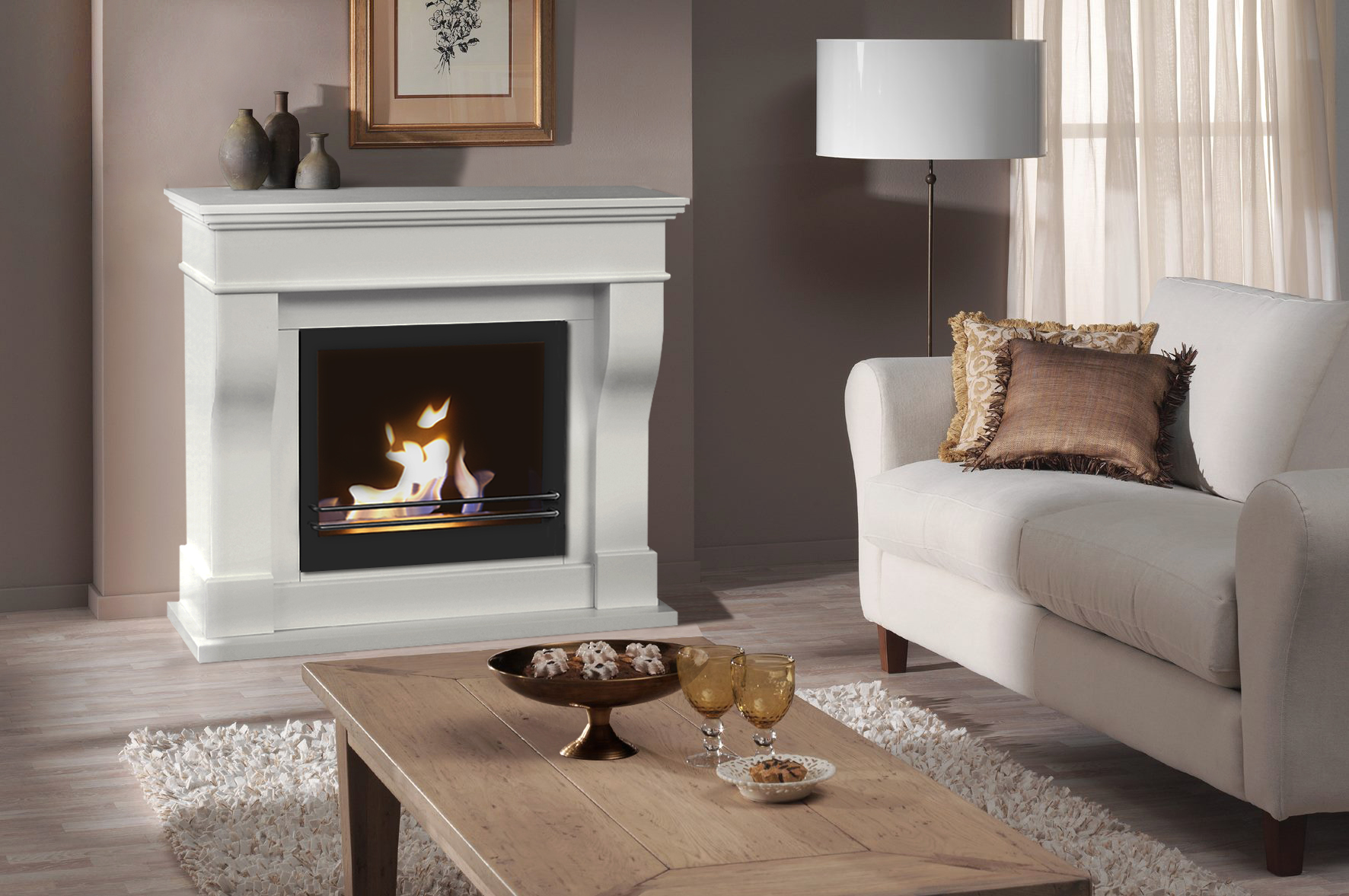
The EU’s new Ecodesign regulation for local space heaters, Regulation (EU) 2024/1103, has applied since July 1, 2025. Electric fireplaces with heating functions fall within the scope of the new regulation. For European buyers, this means that attention should not only be paid to new products. Existing models that previously complied with EU ErP requirements also need to be reassessed before continuing to place them on the market.
What New Requirements Does the EU ErP Regulation Introduce for Electric Fireplaces?
I. Which Types of Electric Fireplaces Are Covered?
Under the new regulation, the products discussed here are electric fireplaces with a heating function intended for use in rooms. Common products include:
1. Wall-mounted electric fireplaces
2. Built-in electric fireplaces
3. Media wall electric fireplaces
4. Fireplace mantels with electric fireplace inserts
5. Freestanding electric fireplaces
Please note: Decorative fireplaces that provide only a flame effect, without a heating function, are outside the scope discussed here. The regulation determines applicability based on the product’s functions, intended use, and installation method.
II. What New Requirements Does the ErP Regulation Introduce?
The updated ErP regulation requires attention to two major areas: product technology and technical documentation. Key points include:
1. Does the product’s standby power consumption meet the new limits?
2. Does the product need to be reassessed after changes to the control board or software?
3. Are the user manual, embalaje, and website information updated consistently?
4. Can the supplier provide repair spare parts over the required period?
In other words, the new regulation is not simply about obtaining a new test report. It requires suppliers to have the overall capability to manage technical improvements and maintain the necessary product documentation.
Key ErP Requirements and Their Impact on Electric Fireplaces
• Seasonal space heating efficiency — The product must meet the specified minimum efficiency.
• Temperature and heating control — Thermostatic control, timers, and other functions affect the efficiency calculation.
• Low-power modes — Power consumption in off, standby, and networked standby modes must be controlled.
• Product information — Manuals, embalaje, websites, and technical documentation must be consistent.
• Software management — Software updates must not cause the product to lose compliance.
• Repairability — Spare parts, repair information, and long-term availability must be considered.
III. First Major Change: Seasonal Space Heating Efficiency
For fixed electric local space heaters with a rated heating output above 250 W., the new regulation specifies a minimum seasonal space heating efficiency (ηs) de 47.5%. Since common electric fireplaces typically have rated heating outputs of 750/1500 W or 900/1800 W., most models exceed the 250 W threshold and are therefore subject to this requirement.
Seasonal efficiency is not based simply on conventional electrical-to-heat conversion efficiency. ErP calculations also take into account factors such as temperature control, open-window detection, temperature-control accuracy, timer functions, standby power consumption, adaptive start, and connected control.
A common misconception is that electric fireplaces are close to 100% efficient in converting electricity into heat and therefore automatically comply with ErP. This is not sufficient to determine compliance.
IV. Second Major Change: The Control System Becomes Central to ErP Compliance
The new regulation is not focused simply on maximum heating output. Its objective is also to prevent the product from consuming energy when heating is not required.
Depending on the product positioning, manufacturers can select appropriate energy-saving functions, such as electronic room-temperature control, daily or weekly timers, open-window detection, operating-time limits, adaptive start, and app or remote control.
These functions do not all have to be included in one fireplace. The final configuration must support the required seasonal space heating efficiency. Manufacturers can use different energy-saving strategies, Por ejemplo:
• Electronic room-temperature control: A temperature sensor can be installed near the air outlet to monitor changes in the surrounding temperature. When the temperature reaches the set value, heating stops; when the temperature falls by 1–2°C, heating starts again automatically.
• Daily or weekly timer: Manufacturers commonly use weekly scheduling rather than traditional daily timers to improve energy savings.
• Open-window detection: The temperature sensor detects a sudden drop in ambient temperature, such as 5°C, and the fireplace automatically stops heating. Heating can restart after one hour or be restarted manually.
• Operating-time limit: The user sets a maximum operating period using the timer function.
• Adaptive start: The fireplace automatically starts heating when the temperature is too low and stops heating when the set temperature is reached.
• App or remote control: Wi-Fi-enabled fireplaces can use a public app or a brand-specific app to remotely control operating times or switch heating on and off, helping reduce unnecessary energy consumption.
To comply with the new ErP requirements, manufacturers may need to modify the control system of existing electric fireplace models.
Important technical considerations:
1. Temperature sensor location: The sensor is generally placed near the air outlet. If it is too close, heat transfer can be too rapid and the measured value may differ significantly from the actual room temperature. If it is too far away, temperature detection may become inaccurate. The correct position therefore needs to be determined through repeated technical testing.
2. Temperature-control accuracy: Excessive differences between actual and detected temperature are often related to sensor location. The solution is usually to adjust the sensor position and verify temperature-control accuracy under different ambient conditions.
3. App and control-board synchronization: The app settings must remain synchronized with the fireplace control board. This requires joint testing of the app platform, software, sensors, and control board.
4. Control-board and software version management: If the control-board version does not match the version used in the test report, a version-management system should be established for control boards and software.
TIP: Suppliers with in-house control-board and software development capabilities can respond more quickly to regulatory changes, adjust control logic, verify temperature-control functions, and maintain consistency between test samples and mass-production products.
V. Third Major Change: Wi-Fi and Display Functions Must Not Cause Excessive Standby Power Consumption
The ErP regulation sets limits for different low-power modes:
Off mode — Maximum 0.5 W.
Off mode — 0.3 W from May 9, 2027
Standby mode — Maximum 0.5 W.
Standby mode with status display — Maximum 1 W.
Networked standby mode — Maximum 2 W.
Certain wireless-networked standby modes — Maximum 3 W.
Common issues and solutions:
1. The flame and heating functions are off, but the control board continues to consume power. Solution: separately test off mode, standby mode, and networked standby mode.
2. Turning off the display does not necessarily mean the product has entered true off mode. Solution: optimize PCB power management.
3. The Wi-Fi module does not automatically enter low-power mode. Solution: adjust the Wi-Fi module’s sleep and wake-up settings.
4. The remote receiver and display board together increase standby power consumption. Solution: include standby power consumption in product development verification.
5. The power-management logic in the test software differs from that in the mass-production software. Solution: retest after changes to the PCB or software.
VI. Fourth Major Change: Product Information Must Be Consistent Across All Channels
The ErP regulation does not only concern the physical product. Relevant information must also be disclosed in the user manual, technical documentation, official brand website, product detail pages, and technical specification sheets. This may include:
• Rated and minimum heating output
• Seasonal space heating efficiency
• Temperature-control method
• Timer and energy-saving functions
• Off-mode and standby power consumption
• Installation and maintenance requirements
• Disassembly, recycling, and end-of-life information
Manufacturers need to ensure that the test report, PCB, software, user manual, embalaje, and mass-production product are based on the same approved version and that all information remains consistent. Brand owners should also verify and use the same approved information across their sales and marketing channels.
VII. Fifth Major Change: Compliance Responsibilities Extend to Spare Parts and Repair
The new regulation places greater emphasis on the product’s life cycle to further improve energy efficiency and environmental performance. Requirements cover areas such as spare-part availability, delivery times, repair information, software and firmware updates, product disassembly, and material recycling.
When purchasing electric fireplaces, European buyers should also consider the availability of spare parts so that users can replace components with commonly available tools when repairs are required. Spare parts may include PCB control boards, display assemblies, temperature sensors, fans and fan wheels, heating elements, remote receivers, mounting brackets, and remote controls. Some spare parts may need to remain available for up to 10 years after the last unit of a model is placed on the market. These key components therefore need long-term stock planning.
Low-cost suppliers without long-term spare-part and version-management capabilities may create higher total management costs later, including return costs, complete-unit replacement costs, warehousing costs, after-sales service costs, and regulatory compliance risks.
For this reason, European buyers should evaluate not only the supplier’s quotation, but also its technical development capabilities, documentation management, and long-term spare-part supply capability.
VIII. How Can You Evaluate a Supplier’s Ability to Handle the New ErP Requirements?
European buyers can assess suppliers by asking the following questions:
1. Has the product been evaluated according to Regulation (EU) 2024/1103?
2. Does the seasonal space heating efficiency meet the requirement?
3. Have all off and standby modes been tested?
4. Do the test reports match the PCB and software used in mass production?
5. Is compliance reassessed after software updates?
6. Are the user manual, embalaje, and website information updated consistently?
7. Can key spare parts be supplied over the required period?
8. Can the supplier provide repair diagrams, wiring diagrams, and troubleshooting information?
9. Will the supplier notify customers in advance when key components are changed?
As shown above, the new ErP regulation is not simply about a test report. It covers control-board and software development, seasonal energy-saving strategies, spare-part stock, consistency between documentation and products, connected functions, information published through sales channels, and consistency with mass-production units.
Electric fireplace manufacturers with in-house control-board development, software debugging, internal testing, key-component production, and long-term spare-part storage capabilities can respond more quickly to regulatory changes and help brands reduce the risks associated with product launch and long-term sales in the European market.
If you are developing or reassessing an electric fireplace project for the EU market, we welcome the opportunity to discuss product development and compliance requirements with you.
For contact information, please visit www.impressive-flame.com